

In this article
- 1. What Is an EPF Voluntary Contribution?
- 2. Who Can Make Voluntary EPF Contributions in Malaysia?
- 3. Why Should You Consider Making Voluntary EPF Contributions?
- 4. How Much Can You Contribute to EPF Voluntarily?
- 5. Can You Claim Tax Relief for Voluntary EPF Contributions?
- 6. How Can You Make a Voluntary EPF Contribution?
- 7. Can Employers Make Voluntary EPF Contributions for Employees?
- 8. What Should You Know Before Making a Voluntary EPF Contribution?
- 9. Is Making a Voluntary EPF Contribution Worth It?
- 10. EPF Self Contribution FAQs
Most Malaysians don’t pay much attention to their EPF until something sparks the conversation. It could be the annual dividend announcement, a discussion about retirement, or a friend mentioning how much they’ve managed to save over the years.
For employees, EPF contributions happen automatically every month. Part of the salary goes into the account, the employer adds its contribution, and the money continues growing over time.
What many people don’t realise is that these payroll deductions don’t have to be the only contributions you make.
If you’ve received a bonus, earned extra income from freelance work or simply want to put more money aside for the future, you can top up your EPF account yourself. These are known as voluntary EPF contributions.
For some people, it’s about building a larger retirement fund. For others, it’s also an opportunity to enjoy the available income tax relief. Whatever the reason, understanding how voluntary contributions work can help you make better financial decisions.
What Is an EPF Self/Voluntary Contribution?
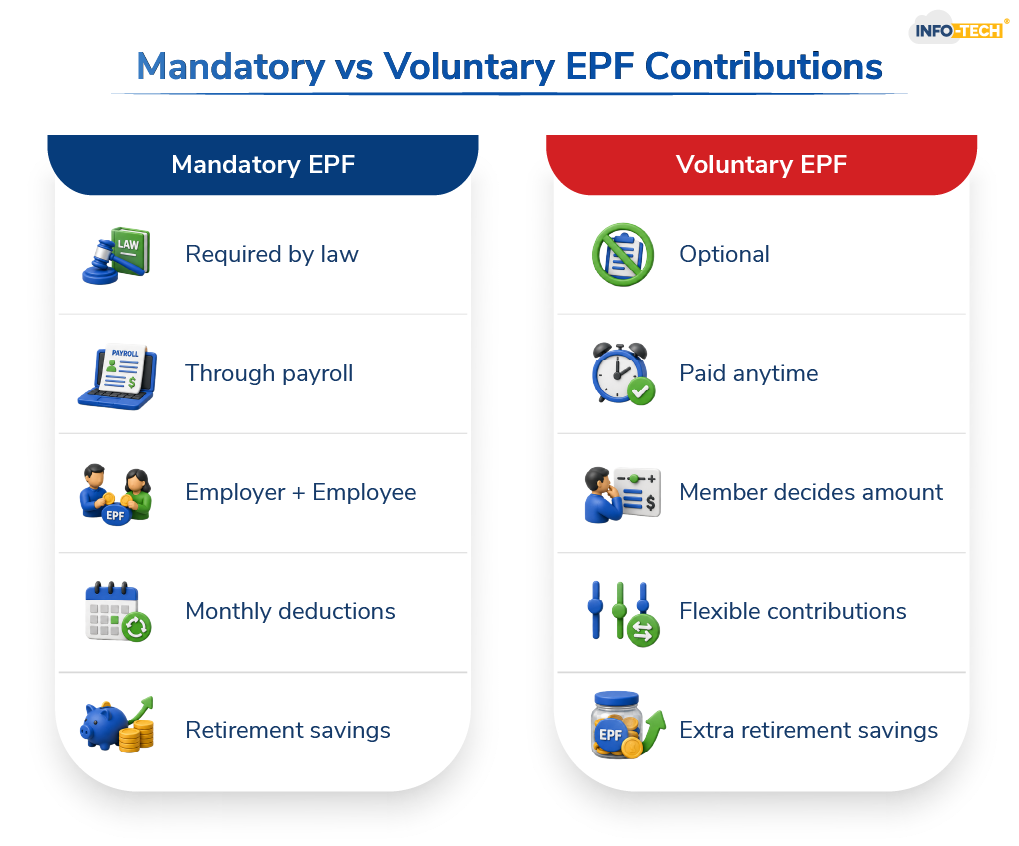
A voluntary EPF contribution is exactly what the name suggests. Instead of relying only on the deductions made through your monthly salary, you choose to deposit extra money into your EPF account.
Once it’s credited, the money becomes part of your retirement savings and earns the same annual dividend as your regular EPF balance.
There’s no fixed schedule either.
Some members contribute every month because it helps them stay disciplined. Others wait until they receive a bonus, complete a freelance project or have a particularly profitable month before making a larger payment.
The flexibility is one of the biggest reasons people choose this option.
Also Read: Understanding Employees Provident Fund (EPF) in Malaysia
Who Can Make Voluntary EPF Contributions in Malaysia?
Although salaried employees can certainly make voluntary contributions, they’re far from the only group doing so.
Freelancers often use them because they don’t receive employer EPF deductions. Business owners may contribute whenever cash flow allows, while consultants, online sellers and gig workers use voluntary contributions to continue building retirement savings even without a traditional employer.
It’s also common for employees with stable jobs to make additional contributions simply because they want to retire with a larger EPF balance.
As long as you’re eligible under EPF’s rules, you can generally contribute to your own account.
Read More: Employees And Employers Must Know What Is EPF In Malaysia
Why Should You Consider Making Voluntary EPF Contributions?
The way Malaysians work has changed.
Many people no longer spend decades with the same employer. Some switch careers several times. Others earn income from multiple sources or work entirely for themselves.
That flexibility is great, but it also means retirement planning becomes more personal.
Making voluntary EPF contributions is one way of taking control. Even relatively small top-ups made consistently can grow over the years through EPF dividends.
The earlier you start, the longer your savings have to grow.
Read More: EPF Employer Contribution for Salaries Above and Below RM5,000
How Much Can You Contribute to EPF Voluntarily?
You don’t need a large amount to get started.
The current minimum voluntary contribution is RM10 per transaction, making it accessible even for those with irregular income.
There is also an annual contribution limit set by EPF. Under the current guidelines, voluntary contributions into your own account are generally capped at RM100,000 per year. If you’re planning to contribute a substantial amount, it’s worth checking the latest EPF guidelines before making payment, as contribution rules may change.
Can You Claim Tax Relief for Voluntary EPF Contributions?
This is often the question that gets people’s attention.
Eligible voluntary EPF contributions can be claimed together with mandatory EPF contributions when calculating personal income tax relief, subject to the limits announced for the relevant Year of Assessment.
For example, if your compulsory EPF deductions haven’t fully utilised the available relief, making an additional voluntary contribution may help you maximise the amount you can claim.
Because tax rules are reviewed from time to time, it’s always worth checking the latest guidance issued by the Inland Revenue Board (LHDN) before filing your tax return.
How Can You Make a Voluntary EPF Contribution?
Making a contribution today is much easier than it used to be.
Most members simply use i-Akaun or the official KWSP mobile app. Payments can also be made through JomPAY using participating online banking services.
If you prefer handling things in person, EPF branches and self-service kiosks remain available throughout the country.
Whichever method you choose, keep a copy of your payment receipt or transaction confirmation. It only takes a few seconds and can be useful when reviewing your contributions or preparing your income tax return.
Can Employers Make Voluntary EPF Contributions for Employees?
Yes.
Some companies contribute more than the statutory minimum as part of their employee benefits package.
Additional EPF contributions may be used as long-service rewards, performance incentives or year-end appreciation. For employees, it means more retirement savings. For employers, it’s another way to invest in employee wellbeing beyond salary alone.
Businesses considering this approach should still consult their finance team or tax adviser to understand the relevant tax treatment.
What Should You Know Before Making a Voluntary EPF Contribution?
Voluntary contributions are designed to be flexible.
You aren’t required to contribute every month, and missing a month doesn’t affect your EPF membership. The amount you contribute is entirely your choice, provided it falls within EPF’s contribution rules.
It’s also worth keeping copies of your receipts and checking the latest EPF and LHDN announcements each year, especially if you’re making contributions with tax relief in mind.
Above all, contribute an amount that’s comfortable for your financial situation. Retirement planning should support your long-term goals, not create unnecessary pressure today.
Is Making a Voluntary EPF Contribution Worth It?
Saving for retirement doesn’t always require major financial decisions. Often, it’s the smaller, consistent habits that make the biggest difference over time.
Voluntary EPF contributions give Malaysians the freedom to save beyond the compulsory payroll deductions. Whether you’re employed, self-employed or earning income from several sources, topping up your EPF account is a practical way to strengthen your retirement savings while potentially enjoying available tax relief.
The important thing isn’t contributing a huge amount overnight. It’s developing the habit of saving whenever your finances allow. Years down the road, you’ll probably be glad you did.
EPF Self Contribution FAQs
Can self-employed individuals make voluntary EPF contributions?
Yes. Self-employed individuals, freelancers, business owners and gig workers can generally make voluntary contributions if they meet EPF’s eligibility requirements.
Do voluntary EPF contributions earn dividends?
Yes. They receive the same annual EPF dividends as mandatory contributions.
What is the minimum voluntary contribution?
The current minimum is RM10 per transaction, subject to any future changes by EPF.
Can employers contribute more than the statutory EPF amount?
Yes. Employers may voluntarily contribute above the required rate as part of employee benefits or reward programmes.