

In this article
- 1. What Is an Employment Verification Letter?
- 2. Why Is an Employment Verification Letter Becoming So Important in Malaysia?
- 3. Why Do Banks Ask for an Employment Verification Letter During Loan Applications?
- 4. Why Are Landlords and Property Agents Asking for Employment Verification Now?
- 5. Why Do Embassies and Immigration Authorities Request Employment Verification Letters?
- 6. Why Can a Poorly Written Employment Verification Letter Cause Problems?
- 7. Why Do Contract Employees Usually Face More Questions?
- 8. Why Does It Sometimes Take So Long for HR to Prepare the Letter?
- 9. What Information Should an Employment Verification Letter Usually Include?
- 10. Employment Verification Letter FAQs
What Is an Employment Verification Letter?
Most people in Malaysia never think about an Employment Verification Letter until somebody asks for it unexpectedly.
Usually, the request appears in the middle of something important. You could be applying for a home loan, planning a visa application, renting a condominium, or joining a new company. Then suddenly, someone says, “We need a letter from your employer confirming your employment.”
At that moment, many employees realize that a payslip alone is not always enough.
An Employment Verification Letter is an official document issued by a company to confirm that a person currently works there or previously worked there. It normally includes details like the employee’s job title, employment duration, salary, and employment status.
On the surface, it looks like a simple HR document. But in reality, it carries a lot more importance than people expect because it acts as direct confirmation from the employer itself.
That’s why banks, embassies, landlords, universities, and even government agencies often request it.
Why Is an Employment Verification Letter Becoming So Important in Malaysia?
A few years ago, these letters were not requested as frequently. Today, things are very different.
Organizations have become more cautious when verifying financial stability and employment legitimacy. Cases involving fake payslips, false job claims, and manipulated salary documents have made institutions stricter during approval processes.
Because of this, companies and authorities now prefer official employer-issued confirmation instead of relying entirely on screenshots, verbal declarations, or downloaded documents.
In Malaysia, this change is especially noticeable when dealing with:
- Banks
- Immigration authorities
- Property rentals
- Insurance claims
- Overseas applications
- Corporate hiring processes
An Employment Verification Letter creates reassurance. It confirms that the employee is genuinely attached to an organization and earning stable income.
That single document can influence whether an application moves smoothly or becomes delayed.
Why Do Banks Ask for an Employment Verification Letter During Loan Applications?
This is one of the most common situations Malaysians face.
When applying for a housing loan, personal financing, or car loan, banks want to understand more than just how much you earn. They also want to know whether your employment is stable.
For example, someone earning RM7,000 on a short-term contract may be assessed differently from someone earning RM5,000 in a permanent role with several years of service.
That’s why banks often ask for an Employment Verification Letter together with:
- Payslips
- EPF statements
- Bank statements
- Income tax documents
The letter helps the bank confirm:
- Your employment status
- Your designation
- Your salary
- Your joining date
- Whether your employment is ongoing
Some banks even ask whether the employee has completed probation.
To employees, it may feel like too much paperwork. But from the bank’s perspective, they are trying to reduce lending risk before approving long-term financing.
Why Are Landlords and Property Agents Asking for Employment Verification Now?
The rental market in Malaysia has changed quite a bit over the years.
Landlords are more cautious today, especially in larger cities like Kuala Lumpur, Penang, and Johor Bahru. Many property owners no longer rely only on verbal assurance before handing over a unit.
They want proof that the tenant has stable employment and consistent income.
This is why Employment Verification Letters are now commonly requested alongside:
- IC or passport copies
- Payslips
- Bank statements
- Tenancy application forms
For expatriates and young working professionals, this request is becoming increasingly common.
From the landlord’s point of view, the letter reduces uncertainty. It helps them feel more confident that rental payments will be manageable for the tenant over time.
Why Do Embassies and Immigration Authorities Request Employment Verification Letters?
Anyone who has applied for a visa before has probably encountered this.
Embassies often request Employment Verification Letters to confirm that the applicant has ongoing employment in Malaysia. The letter helps demonstrate financial capability and stronger reasons for returning after travel.
This commonly happens during applications for:
- Tourist visas
- Student visas
- Work permits
- Long-term travel applications
Countries like Japan, Australia, South Korea, the UK, and Schengen nations sometimes require employer confirmation as supporting evidence.
Usually, the embassy wants to know:
- Where the applicant works
- How long they have been employed
- Their monthly salary
- Whether leave has been approved
For immigration officers, stable employment lowers the perceived risk of overstaying or illegal work arrangements.
That’s why the wording inside the Employment Verification Letter matters more than many people realize.
Why Can a Poorly Written Employment Verification Letter Cause Problems?
This is something many HR departments underestimate.
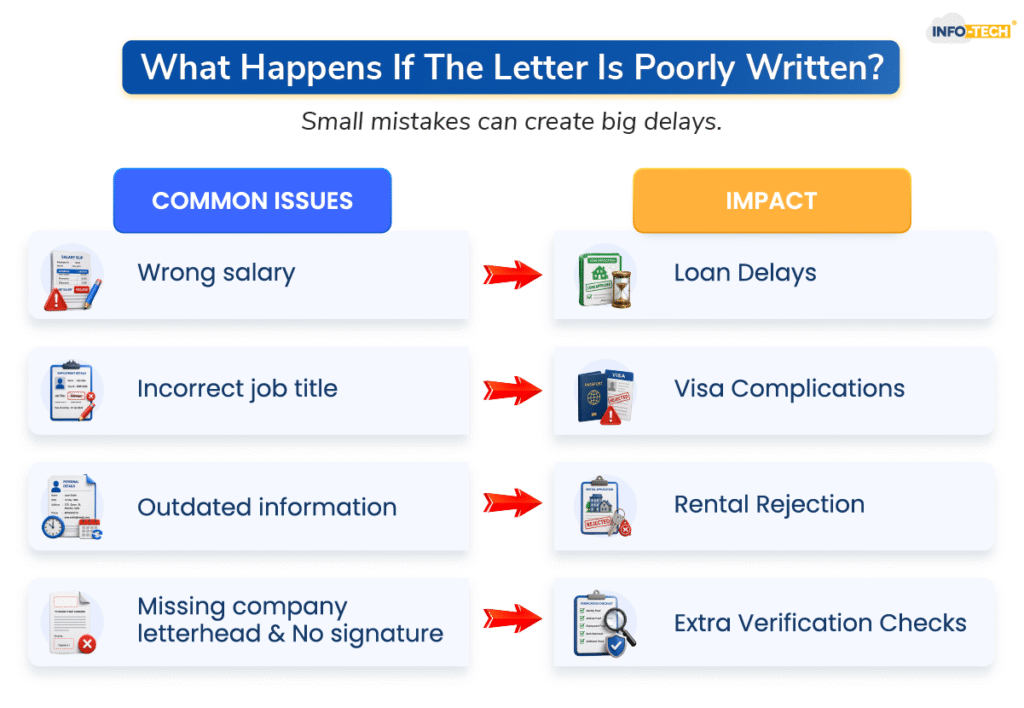
A badly prepared Employment Verification Letter can create unnecessary complications during approvals and verification checks.
Sometimes the job title in the letter doesn’t match the payslip. Sometimes salary figures are outdated. Occasionally, the letter is missing an official signature or company letterhead.
These small inconsistencies can raise doubts.
Banks, embassies, and employers are trained to notice mismatched information. Once discrepancies appear, they may request additional documents or conduct further verification.
Even a wrong employment date can trigger delays.
That’s why companies should never treat these letters like rushed administrative paperwork.
A professionally written Employment Verification Letter should be clear, accurate, and properly formatted because external organizations often use it as part of their decision-making process.
Why Do Contract Employees Usually Face More Questions?
Malaysia’s workforce is changing quickly.
Today, more people work under:
- Fixed-term contracts
- Freelance arrangements consulting roles
- Project-based employment
There’s nothing unusual about this anymore, but financial institutions and authorities usually ask for more clarification when employment is not permanent.
For Example,
Minimum Time in Service: Most banks require you to have been working for the same employer (or under consecutive renewed contracts) for at least 3 to 6 months before applying.
Minimum Remaining Tenure: It is very common for banks (such as MBSB Bank) to require a minimum of 12 months remaining on your current contract at the time of application.
Because of this, contract employees are often asked for more supporting documents compared to permanent staff.
In these situations, a well-written Employment Verification Letter becomes even more important because it helps explain the employee’s work arrangement clearly and professionally.
Why Does It Sometimes Take So Long for HR to Prepare the Letter?
Almost every employee has experienced this frustration before.
You urgently need the document, but HR says it will take several working days.
From the employee’s perspective, it feels like a simple one-page letter that should be ready immediately. But internally, many companies still handle these requests manually.
HR teams often need to:
- Verify payroll information
- Confirm employment records
- Obtain management approval
- Ensure salary details are correct
When multiple departments become involved, delays happen easily.
The problem is that Employment Verification Letters are usually needed during stressful situations where deadlines already exist — loan approvals, embassy appointments, rental signings, or onboarding timelines.
That’s why delays feel even more frustrating.
What Information Should an Employment Verification Letter Usually Include?
While different organizations may request different formats, most Employment Verification Letters in Malaysia normally include:
- Employee’s full name
- Job title
- Employment start date
- Salary details
- Employment status
- Company information
- Authorized signature
Some letters may also mention:
- Allowances
- Department
- Work location
- Confirmation status
The key is accuracy and consistency.
Everything stated inside the letter should match official company records and supporting documents.
Why Does This One Letter Quietly Affect So Many Important Life Moments?
What makes the Employment Verification Letter interesting is how quietly it sits behind major milestones in life.
People rarely think about it until they are:
- Buying their first home
- Moving overseas
- Changing jobs
- Applying for higher education
- Renting a property
It’s not a glamorous document. Nobody celebrates receiving one.
But when you need it, it suddenly becomes extremely important.
A missing or poorly written Employment Verification Letter can delay approvals, create unnecessary questions, or complicate situations that are already stressful enough.
That’s why this simple document carries more weight than most employees realize.
Is an Employment Verification Letter Really That Important?
An Employment Verification Letter used to be one of those documents people hardly thought about. It was just something HR prepared occasionally when an employee requested it. But today, it carries a lot more importance than most people realize.
This single letter can affect whether someone gets a housing loan approved, secures a rental unit, passes a visa application, or even completes a job onboarding process smoothly.
Banks in Malaysia, especially over the past few years, have become much stricter when checking employment and income details. That’s why Employment Verification Letters are now commonly requested together with EPF statements, salary slips, and tax documents. Verification standards encouraged by Bank Negara Malaysia (BNM) have also pushed financial institutions to carry out more careful background checks before approving financing.
At the same time, companies themselves are starting to realize how important accurate employee records have become.
This is where having a proper HR as well accounting, and payroll system makes a big difference. With solutions like Info-Tech HRMS, Accounting Software and Payroll Software, companies can generate Employment Verification Letters much faster and with fewer errors. Since employee information is stored and updated in one system, HR teams can prepare documents more efficiently whenever staff urgently need them for loans, visa applications, or onboarding matters.
Employment Verification Letter FAQs
What is an Employment Verification Letter in Malaysia?
An Employment Verification Letter is an official document issued by an employer to confirm that a person currently works or previously worked for the company. It usually includes details such as the employee’s position, salary, employment status, and joining date.
Why do banks ask for an Employment Verification Letter?
Banks request an Employment Verification Letter to confirm that the applicant has stable and legitimate employment. It helps them assess repayment capability when processing housing loans, personal loans, or car financing applications.
Can I use payslips instead of an Employment Verification Letter?
In some cases, payslips may not be enough. Many banks, embassies, landlords, and employers specifically request an Employment Verification Letter because it provides direct confirmation from the employer about the employee’s work status and income.
How long does it take to get an Employment Verification Letter from HR?
The processing time depends on the company’s internal HR process. Some employers issue the letter within one working day, while others may take several days if approvals or payroll verification are required.