

In this article
- 1. What is the average salary in Malaysia?
- 2. Why Is the Average Salary Higher Than the Median Salary?
- 3. Does Where You Work Affect How Much You Earn in Malaysia?
- 4. Which Industries Pay the Highest Salaries in Malaysia?
- 5. How Does Experience Affect Your Salary in Malaysia?
- 6. Should You Compare Your Salary With the National Average?
- 7. What Is Malaysia’s Minimum Wage in 2026?
- 8. Why Should Employers Pay Attention to Salary Benchmarks?
- 9. What Can We Learn From Malaysia’s Average Salary in 2026?
- 10. Average Salary In Malaysia FAQs
Every year, thousands of Malaysians ask the same question for different reasons.
A fresh graduate wants to know whether the first job offer is worth accepting. An employee preparing for an appraisal wonders if it’s finally time to ask for a raise. A business owner needs to decide whether the salaries they’re offering are still competitive enough to attract good people.
The question sounds straightforward.
What is the average salary in Malaysia?
Finding the answer, however, isn’t as simple as searching for a single number.
One report says the average monthly salary is around RM3,700. Another puts it closer to RM4,000. Then you’ll come across another figure altogether — the median salary — which sits below RM3,000.
At first glance, it looks as though the reports disagree with one another.
They don’t.
They’re simply measuring different things.
Understanding the difference matters because a national salary figure is only useful when you know what it actually represents.
The Short Answer
As of 2026, the average salary in Malaysia is estimated to fall between RM3,650 and RM4,000 a month, depending on the data source and methodology used.
On an annual basis, that works out to roughly RM45,000 to RM48,000 before statutory deductions.
The median monthly salary, meanwhile, remains lower at around RM2,844 to RM2,864.
That gap isn’t a mistake.
It’s a reflection of how income is distributed across the workforce.
Malaysia has a growing number of professionals earning well above the national average, particularly in industries like finance, engineering, technology and oil and gas. At the same time, millions of employees continue working in retail, hospitality, customer service and other sectors where wages remain considerably lower.
When both groups are combined, the national average naturally rises.
Why Is the Average Salary Higher Than the Median Salary?
Imagine a small company with ten employees.
Nine people earn RM3,200 each.
The managing director earns RM45,000 every month.
If you average everyone’s salary together, the result suddenly looks much higher than what most employees actually receive.
That’s exactly why economists often pay more attention to the median salary.
The median simply represents the middle point of all salaries. Half of workers earn more than that amount, while the other half earn less.
For someone trying to compare their own income against the wider market, the median often paints a more realistic picture than the average.
Does Where You Work Affect How Much You Earn in Malaysia?
Malaysia isn’t one uniform job market.
A software developer working in Cyberjaya isn’t competing for the same opportunities as a retail supervisor in Kota Bharu or a production technician in Bintulu.
Location plays a huge role in determining salary levels.
The Klang Valley continues to offer some of the country’s highest salaries, largely because it remains home to multinational companies, financial institutions, regional headquarters and technology firms.
Professionals working in Kuala Lumpur and Selangor commonly earn between RM5,200 and RM5,800 a month, particularly in specialised fields.
Penang tells a different story.
Rather than finance, its economy is driven by advanced manufacturing and semiconductors. Engineers, automation specialists and technical professionals continue to enjoy salaries that sit comfortably above the national average.
Johor has also become increasingly competitive over the past few years. Continued investment in logistics, manufacturing and data centres has created strong demand for experienced workers, particularly around Johor Bahru and Iskandar Malaysia.
Meanwhile, salaries in Sabah and Sarawak generally remain lower than those found in Peninsular Malaysia, although specialised industries such as oil and gas still offer attractive remuneration packages.
Looking only at the national average, therefore, can sometimes be misleading.
A salary that feels comfortable in one part of Malaysia may feel completely different elsewhere.
Which Industries Pay the Highest Salaries in Malaysia?
Not every profession rewards employees equally.
Businesses operating in fast-growing industries often need specialised talent, and specialised talent usually comes at a premium.
Today, sectors such as banking, information technology, cybersecurity, engineering, pharmaceuticals, digital services and oil and gas continue offering some of the strongest salary packages in Malaysia.
Employees with several years of experience in these industries frequently earn well above the national average.
On the other hand, sectors including retail, hospitality, tourism, food and beverage, and general customer service continue employing large numbers of Malaysians at salaries closer to the median.
That doesn’t mean career progression isn’t possible.
Many people build successful careers in these industries.
The journey, however, often depends more heavily on moving into supervisory or management positions before seeing significant increases in pay.
How Does Experience Affect Your Salary in Malaysia?
Anyone expecting their salary to double within two years is likely to be disappointed.
For most Malaysians, income grows gradually rather than dramatically.
The biggest increases usually happen during the first ten to fifteen years of a career, when employees move from junior positions into specialist or management roles.
Someone starting work after university may earn around RM2,800 or RM3,200 a month.
Five years later, after gaining experience and taking on greater responsibility, that same employee could easily be earning considerably more.
Skills also matter.
An employee who continuously upgrades their knowledge, earns professional certifications or develops expertise in high-demand areas often progresses faster than someone who remains in the same role year after year.
Should You Compare Your Salary With the National Average?
Yes—but only to a point.
Too often, people compare their salary with a national average and immediately conclude they’re underpaid.
In reality, a meaningful comparison should consider several factors together.
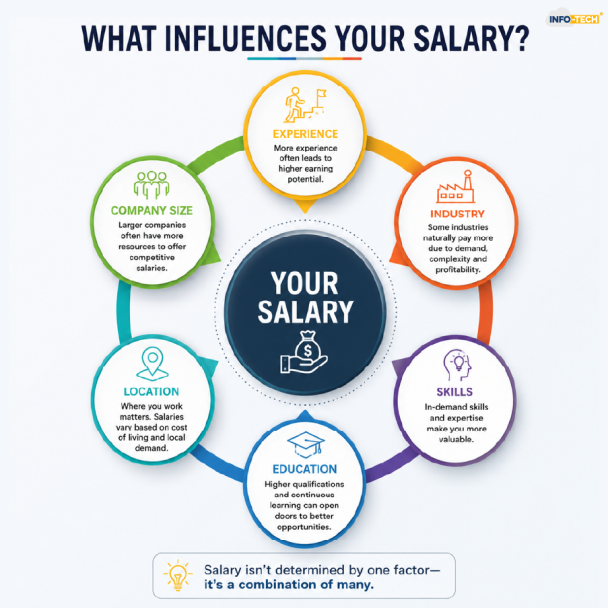
Your industry, location, years of experience, the size of your organization and the complexity of your responsibilities.
An accountant working for a multinational corporation in Kuala Lumpur will naturally have a different salary range from an accountant working for a small family-owned business in a rural town.
Neither salary is necessarily wrong.
They’re simply responding to different business environments.
What Is Malaysia’s Minimum Wage in 2026?
Malaysia’s national minimum wage remains RM1,700 per month in 2026.
It’s important to understand that this figure serves as the legal minimum employers must pay eligible workers.
It shouldn’t be confused with the average salary.
The minimum wage provides a basic income floor, while the average salary reflects what employees actually earn across the wider economy.
Many skilled positions pay substantially more than the minimum, particularly in industries facing talent shortages.
Why Should Employers Pay Attention to Salary Benchmarks?
Salary discussions aren’t only relevant to employees.
Employers rely on the same market data when planning recruitment budgets, reviewing annual increments and deciding whether their remuneration packages remain competitive.
Offering salaries that fall well below market expectations can make hiring increasingly difficult, particularly in sectors where experienced professionals have plenty of options.
At the same time, payroll isn’t simply about deciding how much to pay someone.
Businesses also need to manage statutory contributions, overtime, allowances, bonuses and annual salary reviews accurately.
As companies grow, many turn to integrated HR and payroll software to simplify these processes, reduce manual errors and maintain accurate employee records.
What Can We Learn From Malaysia’s Average Salary in 2026?
At the end of the day, the average salary in Malaysia is exactly that—an average. It gives you something to compare against, but it doesn’t tell you what someone should be earning. A person’s salary depends on far more than one national figure. Experience, skills, industry, location, and even the company itself all play a part.
For businesses, understanding these trends is only half the job. Paying employees accurately and keeping payroll organised matters just as much. That’s where a solution like Info-Tech HRMS and Payroll Software can make everyday work easier, helping businesses manage payroll, statutory contributions, and employee records without the usual manual hassle.
The numbers are useful. But it’s the story behind those numbers that helps both employers and employees make better decisions.
Average Salary In Malaysia FAQs
What is the average salary in Malaysia in 2026?
As of 2026, the average salary in Malaysia is estimated to range between RM3,650 and RM4,000 per month, although the actual amount varies depending on factors such as industry, location, qualifications, and years of experience. Professionals in sectors like technology, finance, engineering, and healthcare often earn above the national average.
What is the difference between the average salary and the median salary in Malaysia?
The average salary is calculated by adding all salaries together and dividing by the total number of workers, while the median salary represents the midpoint where half of employees earn more and half earn less. Because very high incomes can raise the average, the median salary often provides a more realistic picture of what a typical Malaysian worker earns.
Which state has the highest average salary in Malaysia?
Kuala Lumpur and Selangor continue to record the highest average salaries in Malaysia due to the concentration of multinational companies, financial institutions, technology firms, and corporate headquarters. Penang and Johor also offer competitive salaries, particularly in engineering, manufacturing, and technology-related industries.
What factors affect the average salary in Malaysia?
Several factors influence salaries, including industry, job role, experience, education, professional certifications, company size, and location. Employees working in high-demand industries or specialised roles generally earn more than those in sectors with larger labour pools and lower wage growth.