Malaysia is entering a new phase of digital tax compliance. With the Inland Revenue Board of Malaysia (LHDN) rolling out the national
e-invoicing framework, businesses are gradually moving away from traditional invoices toward a fully digital invoicing system that connects directly with the government’s tax platform.
For many companies, this shift may initially sound technical or complicated. In reality, the purpose of e-invoicing is quite simple: it helps businesses record transactions more accurately, submit tax data more transparently, and reduce errors that often occur with manual invoicing.
This is where
LHDN-compliant e-invoicing software becomes essential. Instead of manually preparing invoices and worrying about whether they meet regulatory requirements, the software automatically generates invoices in the correct format, sends them to the
MyInvois system for validation, and keeps a proper digital record for future reference.
For businesses that handle large numbers of invoices every month, this type of automation can save significant time while ensuring that every invoice meets Malaysia’s official compliance standards.
What Is E-Invoicing in Malaysia?
At its core, e-invoicing simply means that invoices are created and exchanged in a structured digital format, rather than as paper documents or simple PDF files. What makes Malaysia’s e-invoicing framework different is that every invoice must be submitted to the LHDN MyInvois platform, where it is validated before it is officially recognised as a legitimate transaction.In other words, the invoice is no longer just a document between the seller and buyer — it also becomes part of the national tax reporting system.
Because of this, invoices must include specific structured data fields that allow LHDN to verify each transaction automatically.
Key Information Required in an LHDN E-Invoice
| Information Category |
What It Includes |
| Supplier Details |
Company name, business registration number, tax identification |
| Buyer Details |
Customer name and tax identification |
| Invoice Reference |
Unique invoice number and issue date |
| Transaction Description |
Goods or services provided |
| Tax Details |
Applicable tax information |
| Validation Information |
Digital validation through LHDN |
When all this information is structured correctly, the invoice can be processed quickly and verified without manual checks.
Why Businesses Need LHDN-Compliant E-Invoicing Software?
For many companies, the biggest concern about e-invoicing is compliance. Regulations are becoming stricter, and businesses must ensure their invoicing practices align with LHDN requirements.Trying to manage this process manually can quickly become overwhelming, especially for organisations that issue dozens or even hundreds of invoices every week.
Using a compliant e-invoicing system removes that burden. The software handles the technical requirements behind the scenes, allowing finance teams to focus on managing transactions rather than worrying about formatting rules or submission procedures.
Some of the biggest advantages include:
- Reducing the risk of human error when creating invoices
- Automatically submitting invoices to the LHDN validation system
- Keeping a secure digital record for audits and reporting
- Simplifying tax reporting and compliance management
- Saving time for finance and accounting teams
In short, the software ensures that businesses stay compliant while making the invoicing process faster and more organised.
What Are The Features of LHDN-Compliant E-Invoicing Software?
A well-designed e-invoicing solution does more than just generate invoices. It connects multiple processes together so that businesses can manage their financial documentation smoothly.Here are some of the most useful features companies typically benefit from.
- Automatic Invoice Generation
The system generates invoices automatically using structured data fields that meet LHDN requirements. This removes the need for manual formatting and ensures that every invoice contains the required information.
- Direct Integration with MyInvois
Invoices can be transmitted directly to the MyInvois platform, where they are validated by LHDN before being finalised.
- Real-Time Invoice Validation
The system confirms whether the invoice has been successfully validated. If any information is missing or incorrect, the software can flag the issue immediately.
All invoices are stored in a digital archive within the system. This makes it easy to retrieve invoices during audits, financial reviews, or tax reporting.
- Integration with HR and Payroll Systems
When invoicing is connected with HRMS and payroll software, businesses can easily generate invoices for payroll services, consulting work, or contractor payments within the same platform.
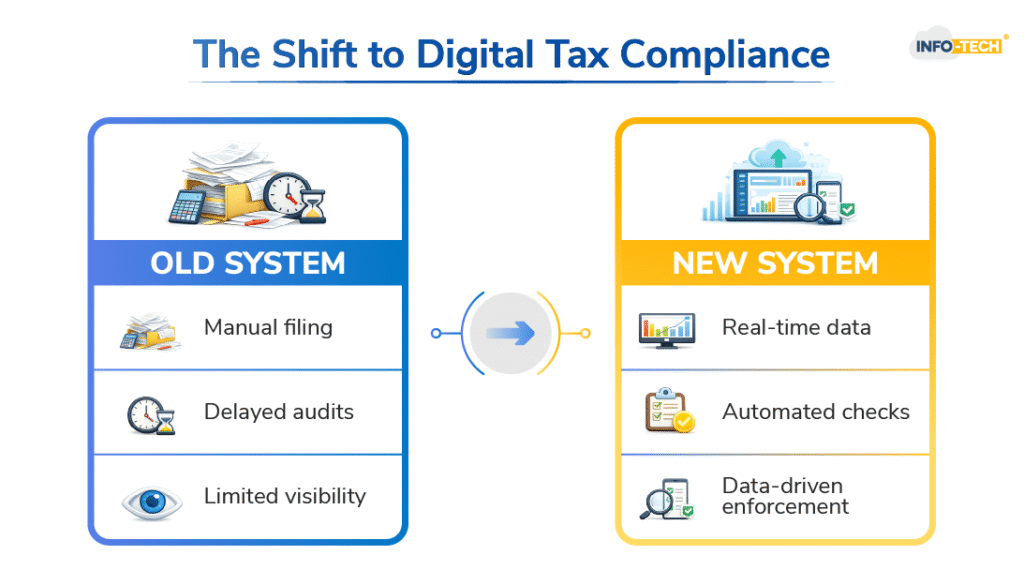
How the E-Invoicing Process Works?
Once the system is set up, the invoicing process becomes very straightforward. Instead of several manual steps, everything happens automatically in the background.
| Step |
What Happens |
| Step 1 |
The business creates an invoice in the system |
| Step 2 |
The software formats the invoice according to LHDN requirements |
| Step 3 |
The invoice is submitted to the MyInvois platform |
| Step 4 |
LHDN validates the invoice and assigns a verification code |
| Step 5 |
The validated invoice is delivered to the customer |
| Step 6 |
The system stores the invoice securely for records |
Because the process is automated, businesses spend far less time handling paperwork or correcting mistakes.
Which Industries Benefit Most from E-Invoicing?
Although e-invoicing will eventually apply to most businesses in Malaysia, certain industries are likely to see immediate benefits from adopting automated solutions.
These include organisations that generate large numbers of invoices or need accurate financial records for compliance.
Common industries include:
- Payroll and HR service providers
- Accounting and financial service firms
- E-commerce and retail companies
- Professional consulting services
- Technology and SaaS companies
- Manufacturing businesses
For these sectors, digital invoicing significantly improves operational efficiency while maintaining regulatory compliance.
Why Integrated HR and E-Invoicing Software Is More Efficient?
Many businesses use separate systems for HR, payroll, and financial management. While this may work initially, it often creates extra administrative work as teams need to move data between systems.An integrated platform simplifies this process by bringing everything together.
| Integrated Feature |
Business Advantage |
| Payroll Billing |
Generate invoices directly from payroll services |
| Contractor Payments |
Manage freelance or outsourced billing easily |
| Financial Reporting |
Consolidate HR and financial data in one system |
| Compliance Tracking |
Maintain consistent records for tax reporting |
By combining HR and invoicing processes, companies can reduce administrative workload and improve financial visibility.
How To Prepare Your Business for Malaysia’s Digital Tax Future?
Malaysia’s move toward e-invoicing is part of a broader effort to modernise the country’s tax infrastructure and improve transparency in financial reporting.For businesses, adapting early can make the transition much smoother. Implementing a reliable LHDN-compliant e-invoicing software helps organisations stay prepared for regulatory changes while improving their internal financial processes.
Instead of relying on outdated manual invoicing methods, companies can automate invoice generation, streamline compliance, and maintain accurate records with far less effort.
With the right system in place, e-invoicing becomes not just a compliance requirement, but a practical tool that helps businesses operate more efficiently in Malaysia’s increasingly digital economy.
E-Invoice FAQs
It’s a guideline introduced by the IRB to explain how they will review businesses for e-Invoice compliance. It outlines how cases are selected, what documents are checked, and how the review process is carried out.
Who will be involved in an e-Invoice compliance review?
The review usually involves your business team, IRB e-Invoice compliance officers (PEI), and a registered tax agent if you choose to appoint one to assist or represent you.
Businesses are selected based on risk indicators. This can come from system analysis or data inconsistencies, rather than random selection.
Typically, the review covers up to two years of assessment. However, in more serious cases, investigations can go back as far as 12 years.