

In this article
Managing business finances is not a simple task to carry out. It involves various resources, expenses, profits, and decisions. The risks of it are not limited to any point, and can cause major loss for the company, if not managed effectively. This guide will break down the meaning of finance management, its aspects, its importance and its contribution to business growth.
What is Financial Management?
Financial Management is the efficient practice of using resources and making informed decisions regarding the expenses and income of an organization, business, or self, to achieve a desired goal.
Managing finances properly will ensure smooth operations, stability, profitability, and long-term growth. Consequently, it will boost business success and drive smooth operations.
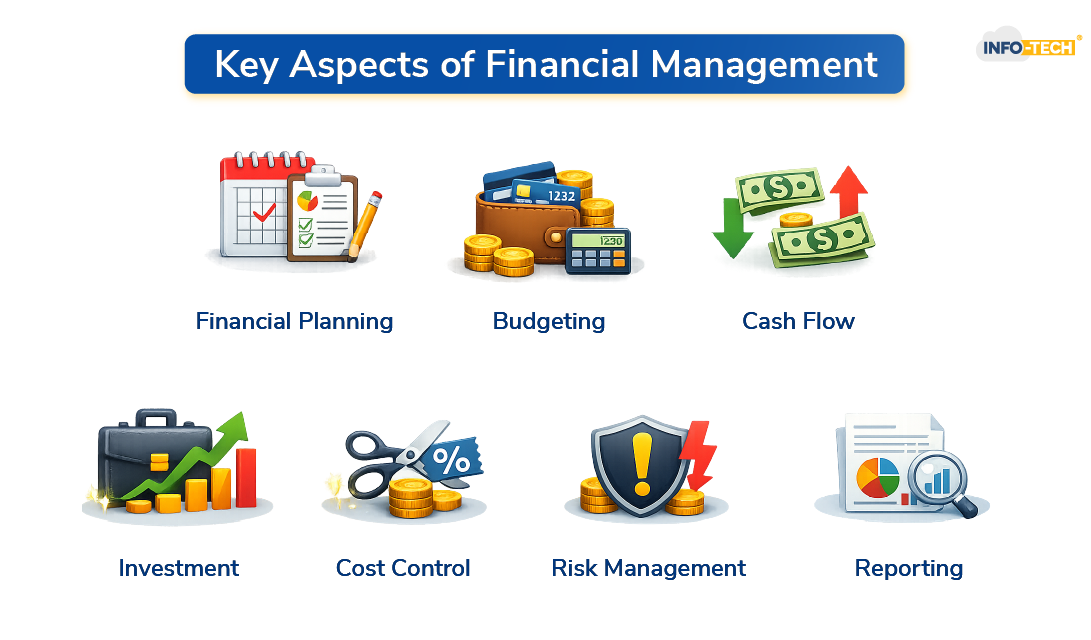
What Are The Aspects of Finance Management?
Managing finances efficiently can result in various positive results. The main aspects of achieving it include:
- Budgeting: Planning on how to spend money wisely.
- Cash Flow Management: Tracking money that comes in and goes out to know the funds for use.
- Investment: Deciding where to invest funds that ensures improved results.
- Cost Control: Cutting down on unnecessary expenses and using resources efficiently.
- Financial Planning: Preparing for future growth and sudden expenses.
Why is Financial Management Important?
- Better Decision Making: Accurate financial data ensures making informed decisions about expenditure and investments.
- Smooth Business Operations: Ensures adequate money for everyday expenditure like rent, salaries and other supplies.
- Improved Cash Flow: Avoids shortage and expense stress.
- Increased Profits: Controls cost and optimizes resources purchased.
- Lesser Financial Risks: Helps find potential risks and lessen losses.
- Increased Investor Confidence: Creates trust among stakeholders for secure funding.
How Does Finance Management Help Businesses Grow?
By controlling costs and improving financial stability, companies can reinvest their earnings into new opportunities such as hiring, technology, and market expansion. In addition, modern tools like e-invoicing further support growth by automating billing processes, reducing errors, and speeding up payments, which improves cash flow and overall efficiency.
Together, strong management of finance and digital solutions like e-invoicing allow businesses to scale confidently, minimize risks, and achieve long-term success.
Choose the right E-Invoicing software with Info-Tech. Contact us today!
Conclusion
Finance management is a vital part of every successful business that not only keeps a business running smoothly but also lays the foundation for sustainable growth and future success. Modern tools help with automation of tasks that help manage finances better and in a more efficient way.
Financial Management FAQs
What is financial management?
Financial management is the process of planning, organising, controlling, and monitoring a business’s financial resources to achieve its goals.
What are the 3 types of financial management?
The three types of finance management are investment decisions, financing decisions, and dividend decisions.
What jobs can I get with financial management degree?
A financial management degree can lead to careers in finance, banking, investment, accounting, and emerging areas like fintech and data analysis.
What are the 5 C’s of finance management?
The 5 C’s of financial management are Character, Capacity, Capital, Collateral, and Conditions.