
When a close relative dies or a serious personal crisis happens, employees ask one key question: Does compassionate leave come with pay in Malaysia? This ranks among the top leave-related queries for Malaysian employees and HR departments because the Employment Act 1955 doesn’t define compassionate leave.
This leads to different benefits across businesses, sectors, and job agreements. This overview explains what this leave means, if it includes pay, how long it lasts, who can take it, and how Malaysian companies often handle it, based on real HR practices and what employees want to know.
What Is Compassionate Leave?
Compassionate leave also known as bereavement leave or emergency personal leave, gives employees time off to handle serious personal or family issues:
- Death of an immediate family member
- Critical illness of a close relative
- Family emergencies that need urgent attention
Unlike annual leave or sick leave, compassionate leave comes up and lasts a short time, given for humanitarian reasons rather than as a legal right.
Is Compassionate Leave Paid or Unpaid in Malaysia?
Short answer: Company policy decides this. In Malaysia:
- ❌ The Employment Act 1955 does not require employers to provide this leave
- ❌ The Act does not specify if it should be paid or unpaid
- ✅ Companies decide based on their HR policies, job contracts, or union agreements
Since compassionate leave may be paid or unpaid depending on company policy, employers also need to ensure the employee’s leave status is reflected correctly when processing salary. Payroll software can help businesses calculate payroll based on the applicable leave arrangement and maintain accurate salary records.
What’s Common in Malaysia?
Though the law doesn’t require it, many Malaysian companies choose to offer paid time off for family emergencies as a good HR practice.
| Practice | Common Outcome |
| MNCs & large corporations | Paid (2–5 days) |
| SMEs | Paid or unpaid, case-by-case |
| Contract / probation staff | Often unpaid |
| Unionised workplaces | Paid (as per CBA) |
In reality paid leave for family emergencies has become standard especially for full-time employees.
How Many Days of Compassionate Leave Are Given?
Companies in Malaysia don’t have a set number of days, but most follow similar guidelines.
Typical bereavement leave entitlement in Malaysia
| Relationship | Common Leave Duration |
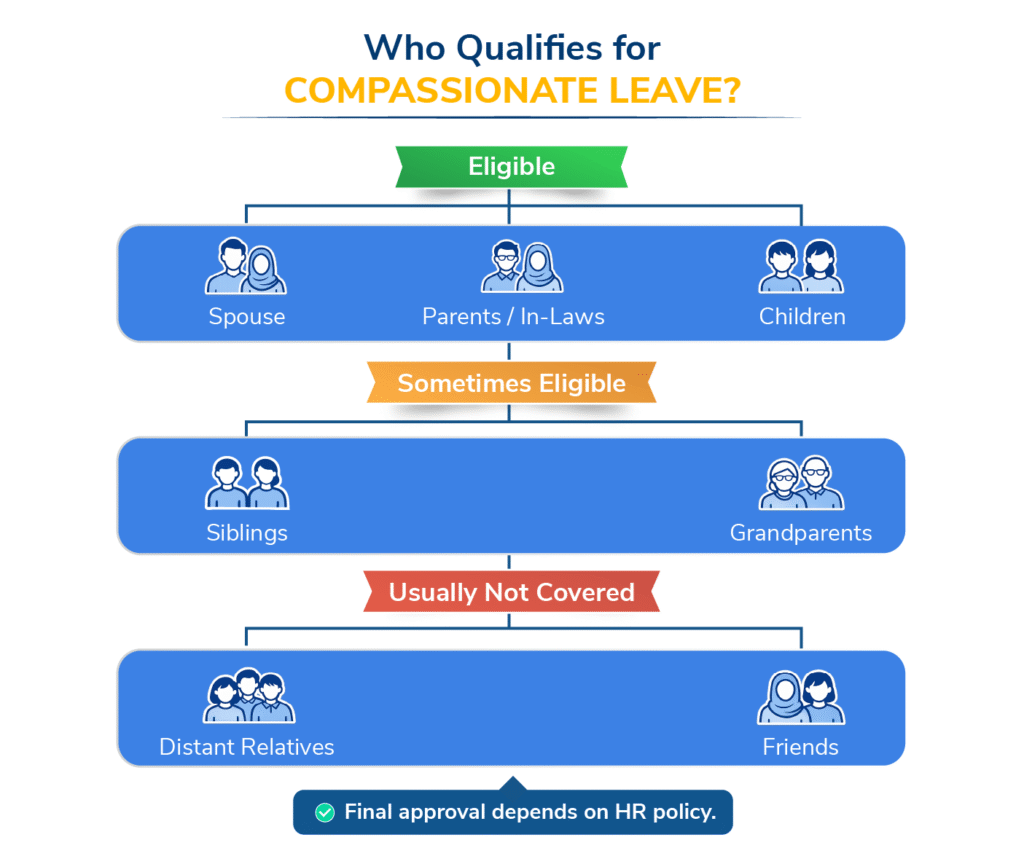
| Spouse | 3–5 days |
| Parents / Parents-in-law | 3–5 days |
| Children | 3–5 days |
| Siblings | 1–3 days |
| Grandparents | 1–3 days |
Some companies allow extra unpaid leave if employees need more time.
Who Is Eligible for Compassionate Leave?
Eligibility depends on company policy, but often includes:
- Permanent employees
- Employees who have finished probation
- Employees facing immediate family emergencies
Part-time, seasonal, or temporary employees might get time off, but it’s unpaid unless their contract says otherwise.
Since compassionate leave depends largely on company policy, employers need to keep their leave rules and employee information clear and organised. HR software can help HR teams maintain employee records and manage HR policies in one place, making it easier to handle leave requests consistently. 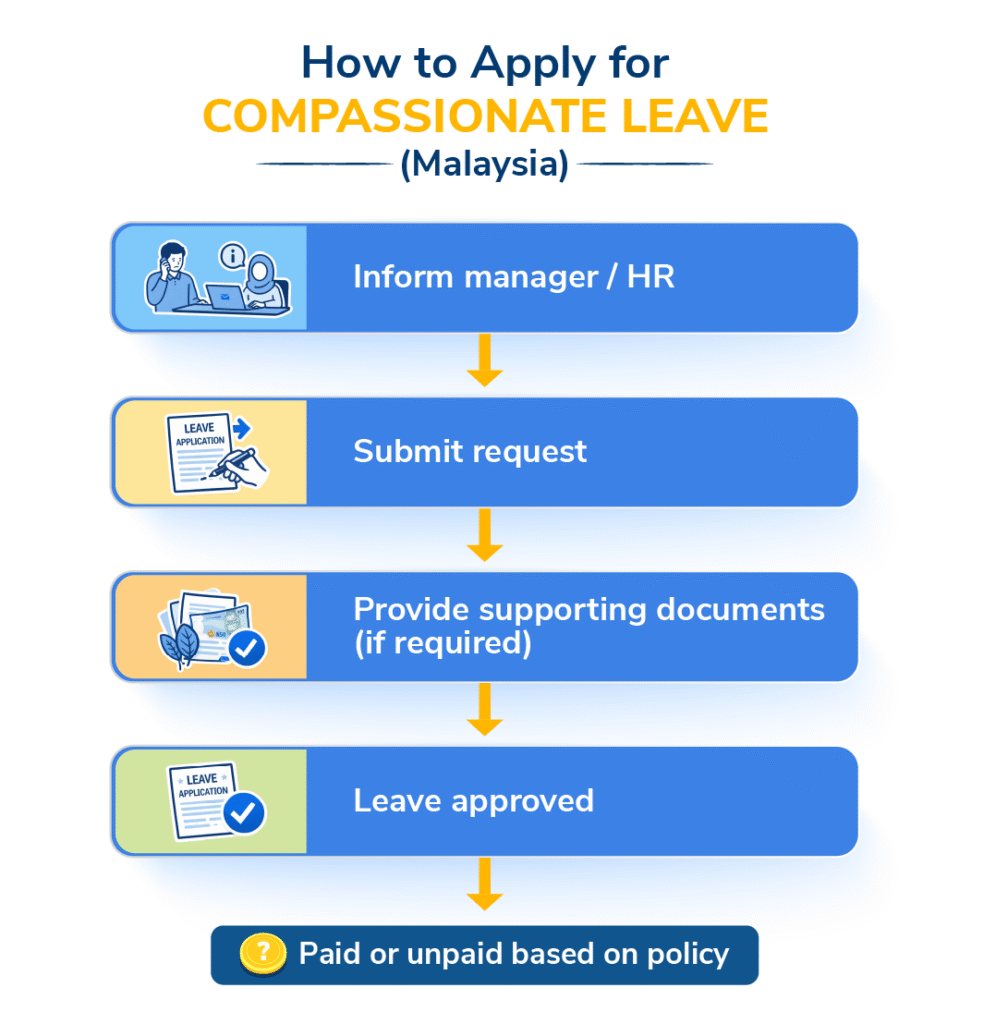
What Are the Guidelines for Bereavement Leave in Malaysia?
Because bereavement leave isn’t required by law, the “guidelines” include:
- The company might ask for proof (like a death certificate or hospital note)
- This leave is for close family members
- You can’t save up unused bereavement leave for later
- You can’t exchange bereavement leave for money
Each company sets these guidelines for itself.
What’s Another Name for Bereavement Leave?
Employees often look for different terms. Common alternatives include:
- Bereavement leave
- Emergency leave (informal usage)
- Funeral leave
- Special leave
However, “compassionate leave” and “bereavement leave” are the terms most often used in leave management Malaysia.
What Is The Difference Between Compassionate Leave And Compensatory Leave?
Many employees confuse between these two leaves, but they are different.
| Aspect | Compassionate Leave | Compensatory Leave |
| Purpose | Personal emergency | Time off for OT |
| Trigger | Death / illness | Extra hours worked |
| Legal status | Non-statutory | Policy-based |
| Paid? | Usually yes | Yes (time-off) |
What Is An Example For Compassionate Leave Policy?(Malaysia)
| Policy Element | Typical Practice |
| Paid days | 3 days |
| Eligible relatives | Immediate family |
| Proof required | Yes |
| Carry forward | No |
| Encashable | No |
Key Takeaway
In Malaysia compassionate leave is often paid — but not required by law. It’s mainly a benefit offered by companies influenced by workplace culture rather than rules. For employees always look at your job contract or company handbook. For companies, a clear policy on bereavement leave helps build trust and fairness when tough times hit.