
In this article
Are Consumers Thinking Differently About Transactions Today?
Why Does Transparency Matter?
- “Why is this price higher than what I saw earlier?”
- “Is SST included or added on top?”
- “What is this extra charge for?”
Are Consumers Becoming More Cautious About Payments?
What’s Wrong with Traditional Invoicing Today?
- A lump sum total
- A short description
- Little or no tax detail
How Does an E-Invoice Improve Transparency?
- What was purchased
- How much each item costs
- Any discounts applied
- Exactly how tax is calculated
Is Transparency Now Influencing Customer Decisions?
Here’s something a lot of businesses underestimate — people notice transparency. If two businesses offer the same product, but one gives a clean, detailed invoice and the other doesn’t, customers will naturally feel more confident with the first one. It’s not even a conscious decision most of the time. It’s just a feeling of: “This one seems more professional… more reliable.” That feeling matters more than many realise.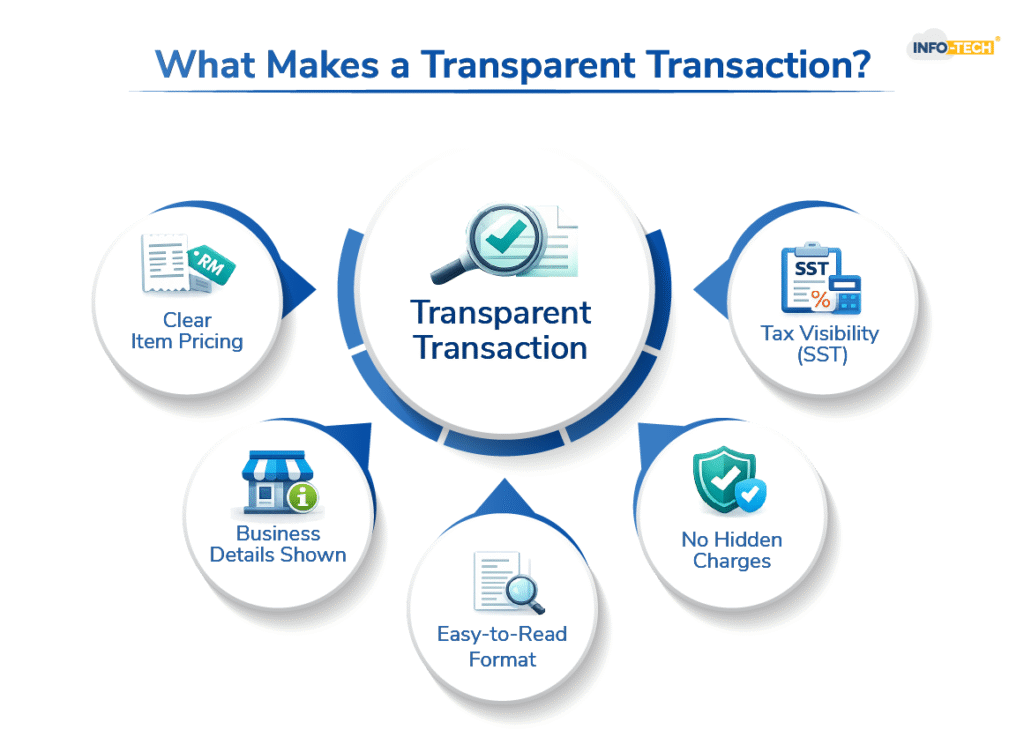
How Does E-Invoice Connect Compliance with Customer Expectations?
With Malaysia moving towards mandatory e-invoicing, a lot of companies are preparing because they have to. But the interesting part is — even without the regulation, customers were already moving in this direction. On one side, the government wants better tracking and reporting. On the other side, customers want clarity and honesty. The e-invoice sits right in between, solving both without businesses having to do two separate things.What Happens If Businesses Don’t Adapt to This Shift?
Some businesses might think: “We’ve always done it this way, and it’s fine.” And maybe it was — before. But now, small gaps in clarity can slowly turn into bigger issues:- More customer questions
- Slower payments
- Frustration on both sides
- Less repeat business
Final thought
Malaysian consumers aren’t asking for anything complicated. They just want to understand what they’re paying for. That’s it. But in a world where clarity hasn’t always been the norm, that simple expectation is changing how businesses operate. The e-invoice might seem like a backend process — something for finance teams and compliance. But from the customer’s point of view, it’s something much more visible. It’s proof that a business is open, clear, and worth trusting.Transaction Transparency FAQs
Why are Malaysian consumers suddenly asking for more transparency in transactions?
It’s mainly because people are more aware of how they spend now. With rising costs and easy access to price comparisons, consumers want to know exactly where their money is going. They’re no longer comfortable with vague totals — they expect clear breakdowns, proper tax details, and honest pricing.
How does an e-invoice help improve transparency for customers?
An e-invoice shows everything clearly — from item pricing to tax calculations — in a structured format. Instead of guessing what’s included in a total amount, customers can see the full breakdown. It removes confusion and makes the whole transaction feel more reliable and easy to trust.
Is e-invoicing only important for compliance with LHDN?
Not really. While compliance is a big reason businesses are adopting e-invoice systems, it also plays a role in customer experience. A clear and professional invoice builds confidence, reduces disputes, and makes your business look more credible in the eyes of customers.
What happens if a business doesn’t provide clear invoices?
At first, it might just lead to a few extra questions from customers. But over time, it can create bigger issues like payment delays, misunderstandings, or even loss of trust. Today, customers are more likely to choose businesses that are upfront and transparent with their pricing and documentation.