You usually don’t think much about HR when things are going well.
Everyone shows up, work gets done, salaries go out, and the business moves forward. It feels manageable. But the moment something goes off—someone resigns suddenly, payroll doesn’t match, or there’s confusion about leave—that’s when HR becomes very real, very quickly.
In Malaysia, managing people isn’t just about keeping your team productive. There’s also the compliance side of things—EPF, SOCSO, EIS, tax deductions, employment rules. It’s not complicated once you understand it, but it does require consistency. And that’s where many businesses struggle.
Why Hiring Isn’t Just About Filling a Position?
A lot of business owners think hiring is simple until they actually go through it a few times.
You post a job, wait for applications, shortlist candidates, and hope the person you pick works out. But it rarely goes that smoothly. Either you get too many irrelevant applications, or the right candidates disappear halfway through the process.
In Malaysia’s current job market, especially in places like Klang Valley, candidates move quickly. If your hiring process drags, they’ll accept another offer without thinking twice.
More importantly, hiring the wrong person creates more problems than leaving a position empty for a while. It affects team morale, productivity, and sometimes even customers.
That’s why businesses slowly realise hiring isn’t about speed—it’s about getting the right fit.
Why Payroll Is Where Small Mistakes Become Big Problems?
If there’s one part of HR you can’t afford to get wrong, it’s payroll.
Employees expect their salaries to be accurate and on time. But in Malaysia, payroll isn’t just about paying wages. There are multiple moving parts involved, including statutory contributions and tax deductions.
Most businesses deal with:
- EPF (KWSP) contributions
- SOCSO (PERKESO)
- EIS
- PCB (monthly tax deductions)
Each one has its own calculation and submission process. Doing this manually might seem manageable at first, but as your team grows, it becomes harder to keep everything accurate.
And the problem with payroll mistakes is simple that people notice immediately. Fixing it later takes more time and often affects trust.
Why Employees Leave?
It’s easy to assume that employees leave for better pay. Sometimes they do. But in many cases, the reasons are less obvious.
People start looking elsewhere when:
- They feel like their work isn’t recognised
- There’s no clear direction or growth
- Communication from management is inconsistent
- Work becomes stressful without support
These things don’t always show up in reports or numbers, but they affect your business just as much.
Managing this doesn’t require complicated HR strategies. Often, it comes down to simple habits—checking in with your team, being clear about expectations, and handling issues early instead of ignoring them.
When Manual HR Starts Slowing You Down?
In the early stages, most businesses manage HR in a very informal way.
Leave is tracked in spreadsheets. Attendance is noted manually. Claims come in through messages or emails. It works—for a while.
But once your team grows, things start slipping. Records don’t match, approvals get delayed, and you spend more time checking than actually managing.
That’s usually the point where businesses realise they need something more structured. Not because they want to complicate things, but because they can’t keep up otherwise.
A simple system—whether it’s for payroll, attendance, or employee records—can remove a lot of this friction.
Why HR Isn’t Just for Large Companies?
There’s a common belief that HR is only necessary when a company becomes “big enough.”
In reality, even a small team benefits from having basic structure in place. It doesn’t have to be complicated or formal, but it does need to be consistent.
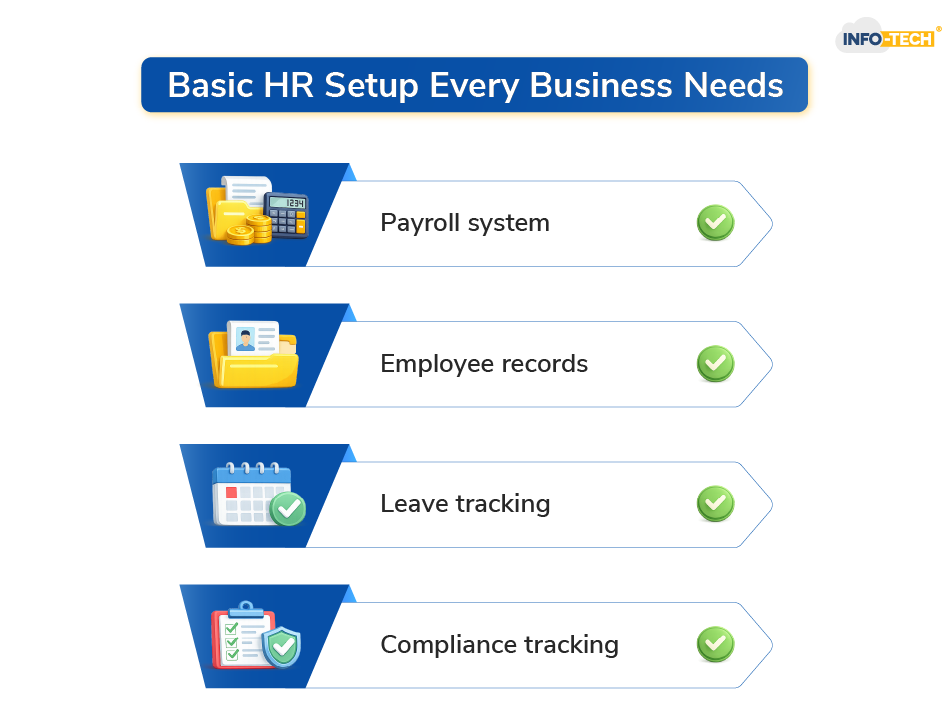
At the very least, businesses should have:
- Clear salary and payroll handling
- Proper tracking of contributions and deductions
- Basic employee records
- A simple way to manage leave and attendance
Once these are sorted, many day-to-day issues become easier to handle.
What Good HR Looks Like?
You don’t always notice good HR—but you definitely notice when it’s missing.
When things are working well, everything feels organised without being forced. Salaries are accurate, communication is clear, and employees know what’s expected of them.
There’s less confusion, fewer repeated issues, and less time spent fixing mistakes.
It’s not about having the most advanced system or the longest policies. It’s about having a setup that works and sticking to it.
Final Thoughts
Managing people will never be completely straightforward. Every team is different, and every situation comes with its own challenges.
But most problems don’t come from complexity—they come from inconsistency.
When there’s no structure, things slowly become harder to manage. Small issues pile up, and before you realise it, you’re spending more time fixing problems than running your business.
Getting your HR processes right early with the right HRMS Software can save you a lot of time and stress later on.
Human Resource Management FAQs
Yes, even small teams benefit from having proper structure. It helps avoid payroll mistakes, compliance issues, and confusion among employees.
What’s the most common HR issue businesses face?
In Malaysia, you can start your maternity leave up to 30 days before your expected delivery date.
When should a company start using HR software?
Usually when manual tracking starts becoming difficult—especially with payroll, attendance, or multiple employees.