In a business environment, managing multiple departments with separate systems can often feel disorganised and difficult to manage – leading to data errors and communication gaps. This is where ERP software comes to play.
What Is an ERP System
An ERP system (Enterprise Resource Planning) is an integrated software that provides solutions to manage and automate the core processes of a business in one platform – instead of using separate systems for accounting, HR, inventory, sales, and procurement.
In simple terms, ERP software helps a business manage all its necessary activities in one place. Think of ERP as the Brain – it connects different departments for the smooth running of a company.
Key Features of an ERP System
There are several features of ERP systems that help businesses run efficiently and smoothly. Here are a few:
- Finance Management: managing income, expenses, invoices, payments, and financial reports.
- Employee Management (HR): managing employee details, payroll, attendance, and leave records.
- Sales Management: records customer orders, sales invoices, and payments received.
- Automation: automatically sends invoices, updates stock and generates reports.
- Inventory Management: tracks stock, incoming and outgoing goods.
- Purchasing Management: manages supplier details, approval process, and purchase orders.
Types Of ERP Systems
There are different types of ERP systems, and each is designed for unique needs.
1.Cloud-Based ERP System
It runs on the internet and is best fit for small businesses that prioritise flexibility and have a lesser budget for setup.
- Access from anywhere
- Software installation not required
- Lower upfront cost
- In-house servers not required
- Automatic updates
2. On-Premise ERP System
It is installed on the company’s server and is internally managed. Best suited for large businesses and needs strong data control.
- Full data control
- Internal IT support required
- Higher setup cost
- Customisable
3. Hybrid ERP System
This is a mix of cloud and on-premise systems – for businesses that want both security and scalability.
- Data partly stored locally
- Some apps run in the background
- Flexibility and control
Benefits Of Using an ERP System
In broader terms, ERP systems offer businesses to work smarter, not harder. However, the advantages of implementing them vary based on the model that is deployed.
1. All information in one place: All the business information such as finance, sales, and inventory are all stored in one place – eliminating the need to switch between files to find a detail.
2. Timesaving: Generating invoices, updating stock, and creating reports are automated – reducing manual work.
3. Fewer errors: since data is only entered once, duplication errors can be wiped out.
4. Cost reduction: improved efficiency and lesser errors, cut down expenses, and avoid loss.
5. Faster decision making: real-time reports and dashboards enable quick view of sales, expenses, and performance – boosting decision making process. 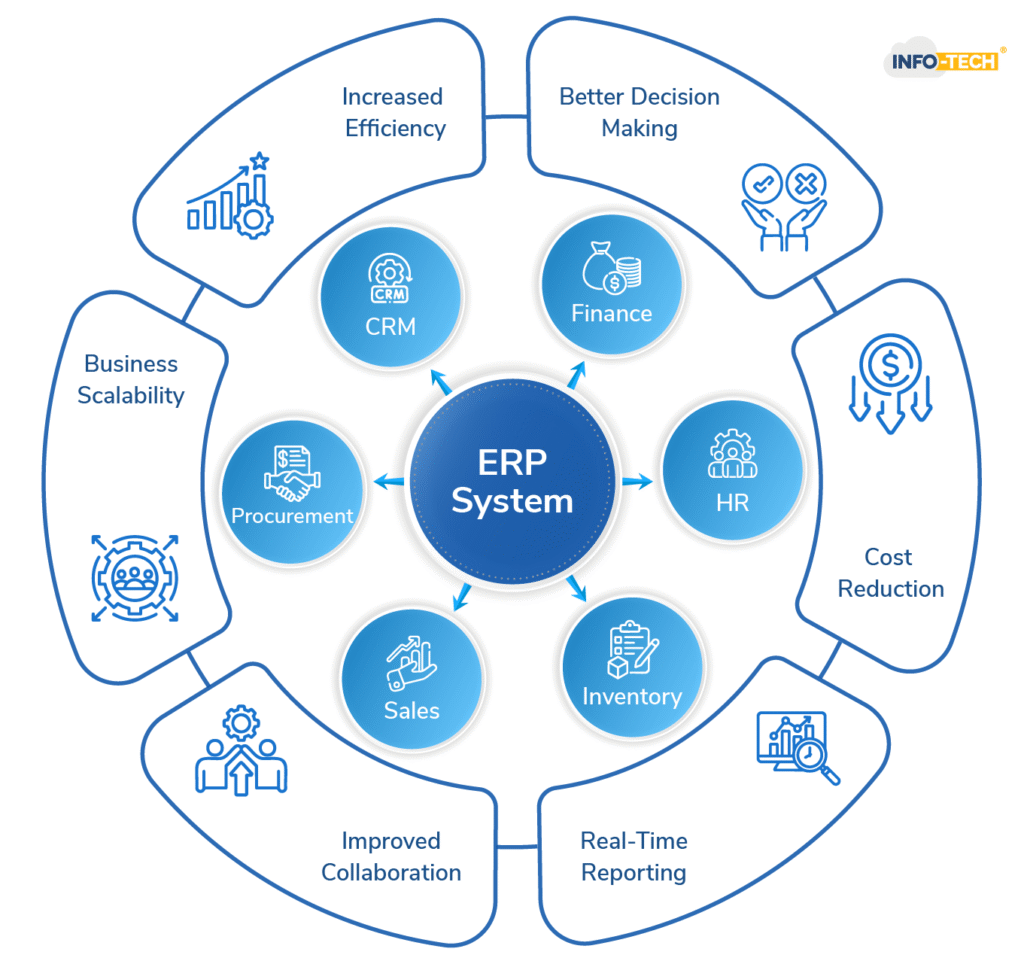
Who Needs an ERP System
Though ERP systems are useful and suitable for all businesses that aim for better control, faster processes, and accurate information, the most benefit is for growing SMEs. When a system starts to grow, managing the accounts, employee details, sales, and stock manually can be extremely difficult and can easily result in errors. For businesses that use multiple software systems, rely on Excel sheets, and face data errors or delays, the ERP system is a one-stop option that helps you organise everything in one place.
Large Enterprises with many departments and multiple branches require proper coordination. ERP system connects different departments and provides company-wide reports. For service-based companies, it offers services to manage clients, projects, billing, and employees.
Conclusion: Is an ERP System Right for Your Business?
An ERP system is not only suitable for large enterprises, but for any business that wants to work efficiently and reduce errors. If your company:
- Manages multiple departments
- Struggles with manual data management process
- Faces data mismatches between teams
- Spends too much time preparing reports
- Is planning to scale operations,
then an ERP system would be the best solution. The key decision lies in choosing the right ERP solution as per your business size, budget, and long-term goals.