Annual Leave in Malaysia: Why 2026 Matters for Employers
As organisations move into 2026, HR departments across Malaysia are taking a closer look at how their annual leave policies measure up — not only against the Employment Act 1955, but also against shifting workforce expectations. The law itself has not changed, but the environment in which it operates certainly has. Hybrid work, growing emphasis on employee wellbeing, new hiring patterns and tighter workforce competition are all pushing companies to modernise how leave is structured and managed. These trends mean annual leave is no longer treated as a simple statutory requirement. It is increasingly seen as part of a company’s people strategy — influencing retention, productivity, employer reputation and compliance readiness. With these realities in mind, 2026 presents a timely opportunity for employers to review their frameworks, strengthen governance and adopt digital practices that remove errors and increase transparency. Before looking at what is evolving, let’s recap what remains legally unchanged.Annual Leave Entitlement in Malaysia (Employment Act 1955 – Latest Confirmed Rules)
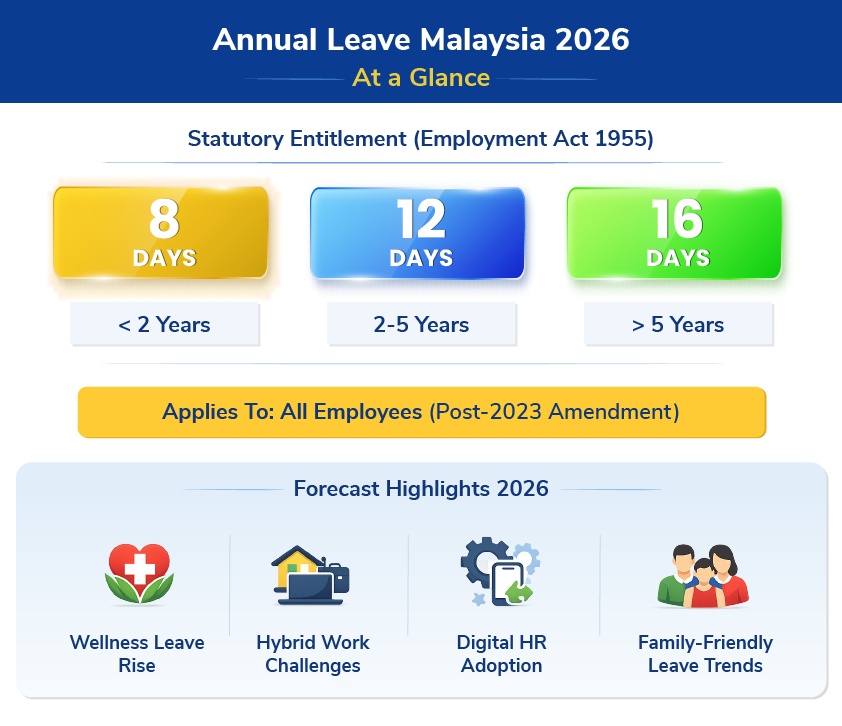
Annual leave entitlement continues to be guided by Section 60E of the Employment Act, which outlines the minimum days employees must receive each year based on length of service:- 8 days per year for employees with less than 2 years of service
- 12 days per year for employees with 2–5 years of service
- 16 days per year for employees with more than 5 years of service
What’s Evolving in 2026: HR Trends Influencing Leave Practices
While no new annual leave legislation has been announced for 2026, several workplace and talent trends are shaping how companies review and upgrade their leave structures.1. Growing Focus on Wellness and Mental Health Leave
Malaysia continues to see rising awareness around mental wellbeing in the workplace. Data shared by the Ministry of Health in 2025 highlighted an upward trend in stress-related cases among working adults. In response, many organisations have voluntarily introduced:- Mental health days
- Wellness leave
- Personal days that do not require medical certificates
2. Hybrid Work Is Making Leave Tracking More Complex
Randstad Malaysia’s 2025 research found that 78% of Malaysian employees prefer hybrid or flexible work arrangements. While this shift has improved work-life balance for many, it has also complicated HR’s responsibility to maintain accurate leave records. Common challenges now include:- Leave approvals scattered across WhatsApp or email
- Unclear attendance for remote staff
- Inaccurate deductions due to manual tracking
- Missing documentation during compliance checks
3. Workforce Restructuring and Contract Roles Are Rising
Malaysia’s SME landscape experienced rapid shifts in 2025 due to digital adoption, increased reliance on project-based work and ongoing cost optimisation. This brought with it more varied employment arrangements such as:- Contract-based roles
- Multi-role or hybrid job scopes
- Shorter probation periods
- Internal transfers within the same year
4. Early Signs of a Push Toward Family-Friendly Leave Policies
Although Malaysia has not yet legislated new family or caregiver leave types, ongoing discussions within HR communities and policy circles suggest that demand for such benefits is growing. Conversations around:- Extended paternal leave
- Gender-neutral caregiver leave
- Eldercare leave
- Menstrual or reproductive health leave
How Malaysian Companies Should Prepare for 2026
1. Refresh Employee Handbooks and Leave Policies
Many HR teams update entitlements but overlook how policies are communicated. For 2026, companies are encouraged to revisit:- Carry-forward rules
- Leave encashment terms
- Procedures for leave approval
- Peak-season blackout periods
- Flexible or wellness leave clauses
2. Digitise Leave Management to Avoid Errors
Manual leave tracking remains one of the most common sources of HR discrepancies in Malaysian audits. Problems such as miscalculated balances, outdated spreadsheets, and inconsistent approval records can result in payroll conflicts or employee dissatisfaction. A digital leave management system simplifies:- Prorated leave calculations
- Approval flows
- Real-time balance updates
- Compliance reporting
- Integration with attendance and payroll
3. Promote Transparency for All Employees
A significant portion of leave disputes come from poor visibility. When employees are unsure of their leave balances or unclear about policies, misunderstandings occur. Providing a modern platform where employees can:- Check balances instantly
- Submit applications online
- Receive timely approvals
- View company-wide policies
4. Recognise Leave as Part of Talent Retention Strategy
As the job market becomes increasingly competitive, benefits play a much larger role in employee decision-making. Organisations offering only the statutory minimum may find themselves losing out to employers with more progressive leave packages. Benchmarking against industry peers annually will help companies stay aligned with market expectations.Annual Leave Forecast for Malaysia (2026–2028)
- Growing adoption of mental health or wellbeing leave
- Wider acceptance of flexible or category-based leave
- Increased emphasis on digital HR compliance tools
- Stricter leave documentation during labour disputes
- Potential trial of unlimited leave models in tech or creative sectors
- Rising advocacy for family-oriented leave policies
Conclusion: 2026 Marks a Shift Toward Smart, Responsible Leave Management
The statutory framework for annual leave remains stable, but how organisations interpret and implement it is evolving rapidly. Employees today expect clarity, fairness and flexibility — and organisations that meet these expectations will naturally gain an advantage in the talent market. As HR responsibilities grow more complex, adopting digital tools becomes essential. Platforms like Info-Tech’s HRMS help companies manage leave, payroll, attendance and compliance in one unified system, reducing risk while improving operational efficiency. Annual leave is no longer a simple administrative task — it is a strategic component of employee experience and organisational resilience.Frequently Asked Questions:
What is the annual leave entitlement in Malaysia in 2026?
Employees in Malaysia are entitled to 8–16 days of paid annual leave based on years of service, as set out under the Employment Act 1955. No new statutory changes have been announced for 2026.
Will Malaysia introduce new leave types in 2026?
There is no confirmed legislation, but many organisations are voluntarily introducing wellness, mental health and family-care leave as part of broader employee wellbeing initiatives.
How is annual leave calculated for new employees?
Annual leave is prorated based on the number of completed months of service. Employers must follow Section 60E’s calculation method and apply it consistently across all employees.
Can employees carry forward unused annual leave?
Carry-forward rules are not mandated by law. Most companies allow a limited number of days to be carried over, but this depends entirely on company policy and must be clearly stated.
Why are more businesses automating leave management?
Automation reduces errors, improves compliance, supports hybrid work arrangements and provides real-time visibility of leave records. It also strengthens audit readiness and simplifies payroll integration.