The Employment Act aims to regulate the everyday workings of employment, not just disagreements. Its main goal is to make sure employers follow basic job standards, no matter what an employment contract says.
How Is The Working Hours and Rest Days?
The Employment Act (Malaysia) states that employees can’t be asked to work more than 8 hours a day or 45 hours a week, not counting extra hours. Rest days are required, and public holidays must be observed or paid for. This rule exists to stop employee abuse and too many work hours in fields where long shifts are normal. Why this matters: If an employer ignores these limits, employees can ask for overtime pay or file complaints with the Labour Department.
How Are The Wages and Overtime Pay?
The Act has strict rules about how and when companies pay wages. Businesses must pay salaries within set timeframes and give overtime pay at rates the law defines. Even if an employee says “yes” to working extra hours for free, these verbal deals can’t overrule what the law says. Why this matters: Many pay disputes happen because employers rely on casual agreements instead of following the wage rules in the law.
What Are The Leave Entitlements?
The Employment Act sets the lowest amounts for:
- Yearly time off
- Sick days
- Hospital stays
- Time off for new moms
Companies can give more days off, but they must give at least what the Act says. Why this matters: Disagreements about leave are among the most frequent complaints from employees in Malaysia when contracts don’t address or define leave policies.
How Is The Termination and Notice Periods?
Ending employment under the Employment Act requires employers to follow specific notice rules or pay instead of giving notice. The notice period depends on how long the employee has worked there, unless their contract offers better conditions. Firing someone can result in employers facing orders to rehire or pay compensation. Why this matters: Mistakes in firing employees often end up in Industrial Court – even when employers think they’ve been fair. 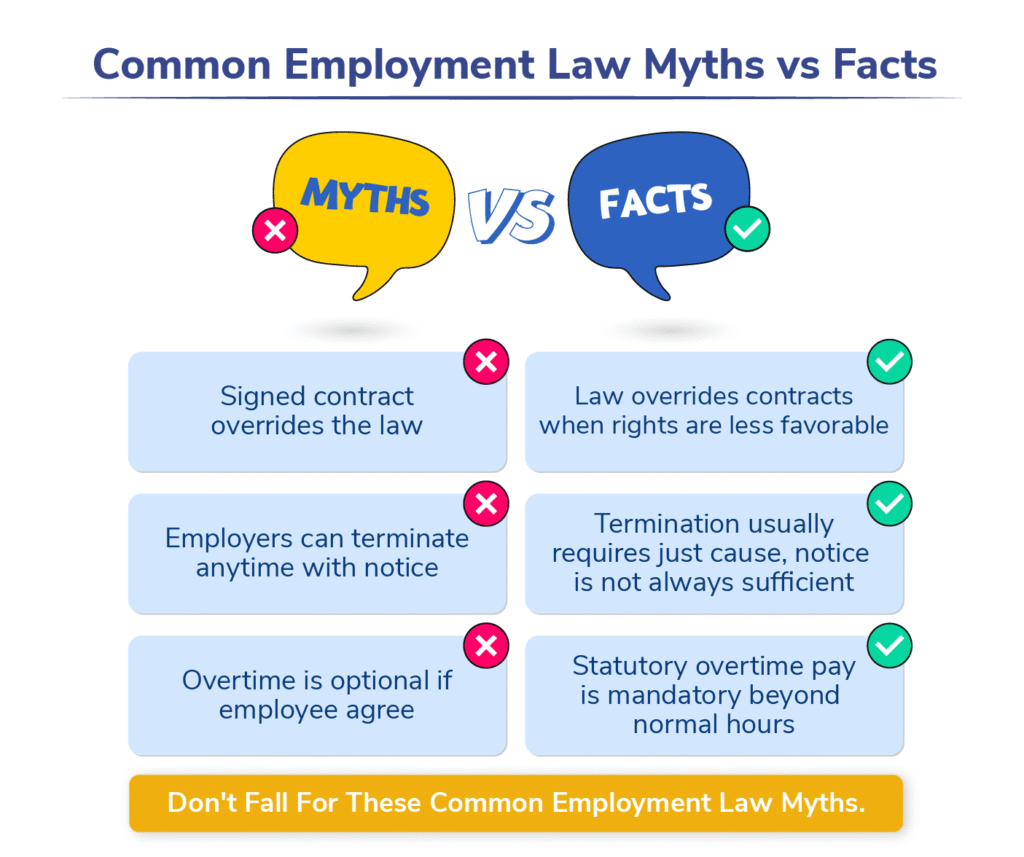
What Employment Rights Act Covers?
The Employment Rights Act (UK) takes a different path. Rather than controlling day-to-day job operations, it zeroes in on safeguarding employees when problems arise.
1. Protection from Unfair Firing
A key part of the Employment Rights Act is shielding employees from unjust termination. Employers need to show:
- A good reason for firing
- A just process
- Balanced action
Employees who lose their jobs without proper steps can ask for money or their job back. Why this counts: In the UK, firing isn’t just about giving notice — it’s about being fair in how it’s done.
2. Rights During Job Cuts
The Act spells out how job cuts must be handled, including:
- Fair selection criteria
- Consultation requirements
- Statutory redundancy pay
Companies handle redundancy from firing for bad behavior or poor work. Why this matters: managed layoffs often lead to expensive court cases.
3. Written Employment Particulars
Companies must give employees written details of job terms, including their role, pay, hours, and notice periods. This rule boosts clarity and cuts down on fights about “what we agreed on”. Why this matters: Spoken deals don’t hold up well without proper paperwork.
4. Protection from Unlawful Deductions
The Employment Rights Act bans pay cuts unless they are:
- Required by law
- Agreed in the contract
- Okayed by the employee
Why this matters: Companies can’t just take money from your paycheck for mistakes, damages, or penalties.
How Is The Impact Of Employment Act And Employment Rights Act
| Situation | Employment Act (MY) | Employment Rights Act (UK) |
| Late salary payment | Statutory violation | Unlawful deduction |
| Excessive work hours | Breach of working hour limits | Less regulated |
| Termination without reason | Risk of unjust dismissal | Likely unfair dismissal |
| Poor documentation | Secondary issue | Major legal risk |
Main point: The Employment Act aims to stop abuse, while the Employment Rights Act tries to fix unfairness after it happens. 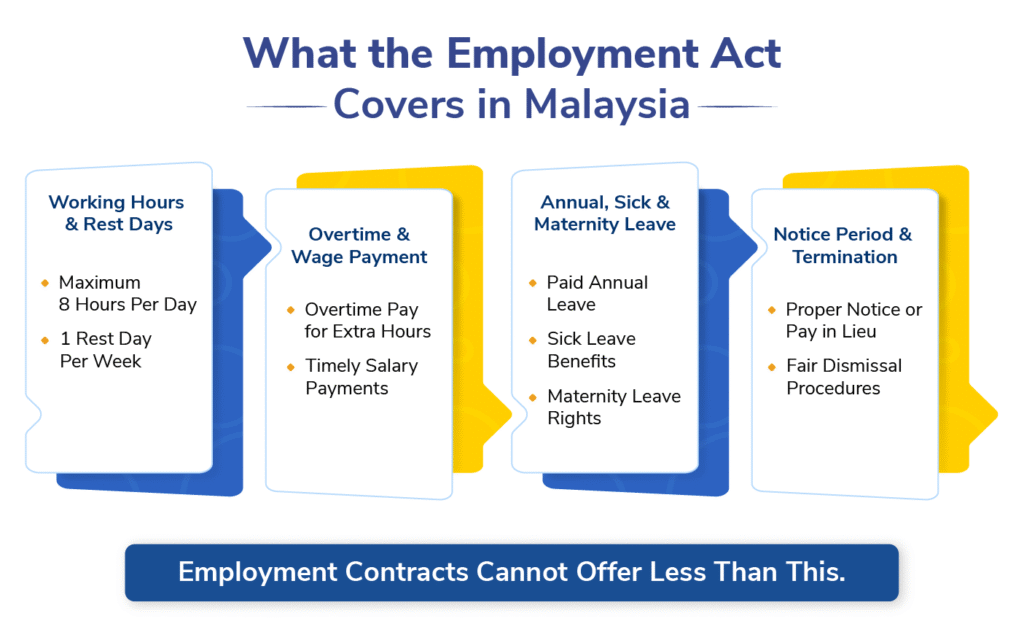
How Is The Employment Contracts And Statutory Law?
An employment contract works within the law — not above it. If a contract:
- Cuts statutory leave → Invalid
- Unfairly reduces notice → Overridden
- Takes away overtime pay → Illegal
Still, contracts can boost benefits, like extra leave or better pay. Why this matters: Many employers think a signed contract shields them — it doesn’t if it breaks the law.
Conclusion
The Employment Act governs how jobs function. The Employment Rights Act guards employee when jobs go wrong. You can’t swap them, they’re not worldwide, and you must follow them. Knowing which law applies — and what it covers — is key to avoid legal and HR slip-ups.
Employment Act FAQs
Is a 90-day notice period legal?
A 90-day notice period is generally legal if it is clearly stated in the employment contract, does not place an unreasonable burden on the employee, and complies with local labour laws. In many jurisdictions, longer notice periods are allowed as long as both parties agreed to them at the time of hiring. However, courts may intervene if a notice period is considered excessive or restrictive, particularly if it unfairly limits an employee’s ability to change jobs or earn a living.
What happens if I break my employment contract?
Breaking an employment contract usually means you are required to serve the agreed notice period or pay salary in lieu of notice. In some cases, employers may pursue civil claims if they can prove financial loss caused by the breach, although this is relatively uncommon. Importantly, employment contract breaches are civil matters, not criminal offences, so criminal penalties do not apply.
Can my employer fire me without a reason?
In Malaysia, employers are generally required to show just cause and excuse, especially in cases involving misconduct or poor performance. In the United Kingdom, dismissing an employee without a fair and valid reason can expose the employer to claims of unfair dismissal, particularly if proper procedures were not followed.
Do I get paid after getting fired?
Yes, employees are still entitled to certain payments after termination. This typically includes wages earned up to the last working day, payment for any unused annual leave if applicable, and notice pay or severance depending on how the termination was carried out. Even when employment ends abruptly, employers are still legally required to settle all final payments in accordance with labour laws and contract terms.